Wednesday, March 08, 2006

Farewell Too Soon

The bus left for heaven again on Monday, and for two of its occupants, it seems too soon.

Dana Reeve, 44, succumbed Monday to lung cancer. (Note: she was a non-smoker; lung cancer is more prevelant in non-smoking women than men.) A talented singer, actor, motivational speaker and devoted mother, Ms. Reeve made her biggest impact after her husband, actor Christopher Reeve, was paralyzed by a spinal cord injury. She cared for him and fought by his side to put the possibility and hope into finding treatments for spinal cord injuries. Together they founded the Christopher Reeve Foundation, an organization she chaired after her husband's death. We like to think that she was the Superwoman behind Superman.

In an official statement from the foundation, spokeswoman Maggie Goldberg noted, "Ms. Reeve established the Foundation's Quality of Life initiatives: the Quality of Life grants program and the Christopher & Dana Reeve Paralysis Resource Center. Since its inception in 1999, the Quality of Life grants program has awarded more than $8 million to support programs and projects that improve the daily lives of people living with paralysis."

Dana Reeve's grace and passion inspired us and never stopped moving us. And, like Elizabeth Glazer in her battle against AIDS, Dana Reeve never stopped hoping, believing, and fighting, throughout her battle with cancer. She set the bar high for women, and we have to wonder. Are we up to the challenge?

With her on that bus is the most beloved player in baseball, Kirby Puckett, 45, who suffered a stroke on Sunday and passed away on Monday. Although the past ten years since his forced retirement from sudden onset glaucoma have reminded us that our heroes are mere mortals, Kirby Puckett gave us a reason again to love baseball.

And America loved him for it. How much? Consider this: In 1982, the year the Minnesota Twins picked Kirby Puckett in the amateur draft, the name "Kirby" dropped off the chart of male baby names (a list compiled by the Social Security Administration). The year after the Twins won the 1987 World Series, "Kirby" jumped almost 200 places on the list of male baby names from No. 867 to No. 684. In 1996, when Puckett left baseball, the name "Kirby" dropped to No. 970 on the list of top 1,000 male baby names. The next year it disappeared. (To read more, check out Minneapolis Star Tribune columnist Nick Coleman's commentary on Kirby.)

Kirby Puckett modeled everything that is good in baseball. He not only played with excellence, he worked the hardest and the longest. He was the first one at practice, and gave it his all, even in a meaningless exhibition game. In the clubhouse, he was the first one to welcome the new guy. He always had time for the fans, especially kids. And his puckish smile and joy for the game infected everyone around him. His unique batting stance was copied on playgrounds across the country. He was the guy the other ballplayers, teammate or opponent, always wanted to be near. He, too, set the bar high -- for excellence in sports.

Our world shines a little dimmer today with their absence from our midst. But, oh, how brightly that bus must be shining. And the others on the bus are crowding around Kirby and Dana, wanting to bask in their light.

Tuesday, February 28, 2006

A Double Deputy Farewell

We often suspect that the bus to heaven waits until it has enough people to make a run before it makes its stop on earth. The passenger list for the Big Ride often reflects what seems like an interesting sense of humor. Remember when Mother Teresa died the same weekend as Princess Diana? What could they possibly have had to talk about? Do you think they discussed charity work or do you think Diana asked the nun how she stayed so thin?

This weekend the pairing was ironic once again: Dennis Weaver and Don Knotts. Both actors became famous on television for portraying deputies, although in different eras and locations. Don Knotts, as anyone who didn’t spend the 20th century in cave knows, played the bulbous-eyed and perpetually anxious Deputy Barney Fife on "The Andy Griffith Show." Dennis Weaver got his start on "Gunsmoke," playing the slow-talking and slow-moving sidekick Chester to James Arness’s towering sheriff.

Both actors appeared in dozens of other successful projects. Knotts was beloved for his grace and generosity with his fellow actors and his fearless embrace of the most distasteful of characters. He was a master comic always happy to play the foil to a more handsome and appealing leading man.

Don Knotts, it's also good to note, was a big screen star. Among his popular films were "The Incredible Mr. Limpet" (where he turns into a fish), "The Reluctant Astronaut" and "The Ghost and Mr. Chicken." His friendship with Andy Griffith extended back to when they were in “No Time for Sergeants” on Broadway. Andy also convinced producers to cast him in the film version.

Dennis Weaver, blessed with far better looks than Knotts, was promoted to sheriff on the series "McCloud." A lifelong environmentalist, Weaver often chose projects that reflected his love of nature and the outdoors. He was also one of those rare actors who remained married to the same woman for 61 years.

It’s hard to realize that these actors, who were fixtures of our childhoods, are unknown to our own children. With their passing goes another piece of our youth and an indelible reminder that each generation gives way to the next. We just hope that with the appalling lack of quality fare on television these days, someone new will step up to fill in their boots. There doesn’t seem to be many actors today who, like Knotts and Weaver, are as admirable off screen as they are on.

We’re glad that they both have someone great to talk to on that bus ride.

***

Rabbi Marc Gellman of God Squad fame takes a look at some of the television icons we lost recently – Scotty, Gilligan and Barney Fife -- in this column from Newsweek.

Wednesday, January 11, 2006

Top 10 Men We Loved in 2005


The wax has been scraped off the menorah. The ornaments have been carefully taken off the tree and put where the dog can’t eat them. The brownies from Grandma Dee have been reduced to crumbs. The holidays are over and we can hardly remember what all the stress was about.

Well, maybe we remember a little since the thinking women have been thinking guiltily about their absence from leading their sistren through the often arcane and labyrinthine world of the media, politics and current events. But dammit, we’ve got laundry to catch up on, don’t you?

To smooth over our negligence, we offer this, our distaff version of the old Esquire Magazine “Women We Love” annual. For your reading pleasure – and ours until we can get back in the saddle – here are:

Top Ten Men We Loved in 2005 and Why.

1. Jon Stewart. He can make you laugh while eviscerating a politician with such intelligence and skill that you never see it coming. His “fake” news program proves that the smartest guy in the kingdom is still the jester. And now he’s hosting the Oscars. Hooray!


2. Steve Martin. He was finally honored with the Mark Twain Prize for Comedy by the Kennedy Center. What took them so long? He has been making us laugh with his gentle, silly and sarcastic form of comedy since before even his hair was gray. He’s fast becoming a favorite novelist as well, shedding a gentle, humorous light on difficult lives. Besides, he gives us happy feet.


3. Ted Koppel. A consummate man of class, Koppel left Nightline with the same dignity and unflinching candor as when he began. We’re just glad he was there to see us through the hard times.


4. Stephen Colbert. Can those eyebrows go any higher? He may have started out slowly, but the Colbert Report has been gaining steam as Colbert becomes the flip side of Jon Stewart’s befuddled everyman. Besides, he coined the 2005 Word of The Year, "truthiness."


5. U.S. Sen. Charles Schumer, (D-NY). Call him arrogant, call him self-serving, call him liberal – Chuck doesn’t care. He’s still there on the front lines making sure that the best interests of the people are served. Let other politicians compromise their progressive values, we know that Schumer will stand firm.


6. Mark Harmon. He's Mark Harmon, isn't that enough? But in case it's not...In a time when youth rules on television, he is the center of one of the coolest shows on television, "NCIS." He has the looks of a leading man combined with the versatility, dependability and generosity found in the great character actors. And he doesn't appear to know it. Who can resist that?

7. Al Franken. The Left was fair game for the Right’s media darlings until Big Al stepped into the fray. His hilarious, scathing and well researched books gave opposing pundits such as Bill O’Reilly fits. Then he gave birth to an always entertaining and informative radio show, as well as an entire radio station devoted to progressive viewpoints. And he’s no paper tiger. He supports the troops not only in words, but by taking regular USO trips to entertain them.

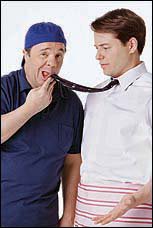
8. Matthew Broderick and Nathan Lane. Broadway’s cutest couple. By themselves they are accomplished and acclaimed performers. But, together, their chemistry is so potent that they are the new acting dynasty. (Thank you, Mel Brooks!) In 2005, with a sold-out run of "The Odd Couple" on Broadway and the release of the film version of their smash stage musical, "The Producers," it is hard to remember a time when they acted alone. (Sorry, Sarah Jessica!)


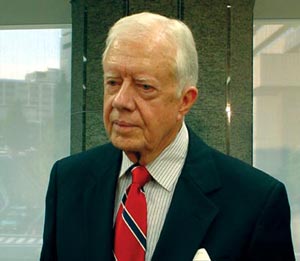
9. Jimmy Carter. Whatever you may have thought of him as president, there’s no doubt in our minds that he is the greatest former president of this, or any, century. Well into his 80s, he continues to make a significant difference in the world while writing books and building homes in his spare time. He is often the voice of sanity in a world gone mad, reminding us that a good Christian loves all his fellow man and works to ease the burden of the oppressed. All this, and he truly loves his wife, an increasingly rare phenomenon in public life.

10. Herb and Glenn. One is a father and another a husband, but the men in our lives who are there for us certainly qualify. These are the kind of men who would drive through a blizzard to pick you up from an airport, think of you whenever something you both love comes on the television and lose their right hand before they would let you down in the ways that truly matter. (And this doesn't even touch on their personal accomplishments.) They are the men behind the thinking women and it’s time they got a moment in the spotlight. Our only hope, here at The Thinking Woman, is that you have men like these in your life, too.

Monday, July 18, 2005

The Incredibles vs The Fantastic Four

Comic book superheroes are meant to be archetypal and iconic, that is, to stand as symbols for our deepest thoughts and desires. Superman embodies our dream of being immune to harm and more powerful than our foes. Batman allows us to explore the darkest recesses of our psyches and still assure ourselves that we are good. Spider-Man represents the ultimate adolescent, an almost-adult on the cusp of change in every imaginable way – mentally, physically, emotionally and even spiritually. The Fantastic Four was emblematic of the new American family – one brought together by forces not recognized by previous generations; a family in constant peril of separation, disintegration and the highest levels of dysfunction.

The first three heroes have been well portrayed in the movies. Superman I, Spider-Man 2 and Batman Begins nailed just what makes these heroes the icons they have become. Now there is a movie about the archetypal super family. It explores what makes a family, how the interaction between the parental figures sets the standard for the entire family’s health and well-being, and the gee-whiz wonder of having super powers.

The name of this movie is The Incredibles.

Unfortunately, the eponymous movie about the Fantastic Four does not explore any of these themes. Instead, it is bogged down in minute details and sacrifices everything, even story telling. The movie is called the Fantastic FOUR and yet at no time did I feel that we had four fantastic individuals or even one fantastic family.

Instead, we had Michael Chiklis in heavy latex darkly lamenting his fate as the ugly and brutish Thing. When the love of his life runs off in the middle of a Brooklyn Bridge crowd just as he’s saving an engine full of firefighters from plunging off the side, I felt not pity but amazement at the stupidity of the director. The unreality of a woman dumping a man in the middle of a heroic rescue before TV cameras – by leaving his engagement ring on the blacktop no less – outweighed the unreality of a man lifting a truck.

As a foil to the Thing we have the Human Torch who is so full of zippy, fun adventures that he seems to be in a different movie. So what if he catches on fire in the middle of an extreme skiing adventure? Instant hot tub for Torchy and the babe du jour. In addition, he’s pulling shaving cream pranks on the Thing – who we witness in a previous scene as being barely able to feed himself.

At least these two “children” have personalities. The parental figures, Mr. Fantastic aka Dr. Reed Richards and Susan Storm aka the Invisible Woman, aren’t much more than attractive forms for skin-tight body suits. We are told that Sue is a doctor of genetics, but she does little beyond play mother hen and defer to her genius boyfriend. She has the power to contain a supernova (a supernova!) with her invisible force field – and yet she can’t keep the bad guy from punching her in the face. The only emotion she stirred in the audience the night I saw it was nervous giggles – it seems that the woman could become invisible by bending light waves but somehow failed to make her clothing disappear. What should she do? Why strip in a crowded public street, of course!

Equaling her in bland fussiness is Reed. Rather than being a bold leader with an incisive mind as in the comics, this Reed is just a science geek who can’t seem to succeed at anything. He hems and haws, he dithers and dallies. Through most of the movie he acts like an extra from the research department who was standing in for the star during lighting rehearsals. And he had so little romantic chemistry with the lovely Sue, he couldn’t even make my 10-year-old son squirm at the “mushy stuff.”

The Fantastic Four should be about what holds a family together and what tears it apart. That was the essential theme in the original comic books that made them so compelling. And that is what made The Incredibles, well, incredible. By the end of The Incredibles, we were uplifted at the prospect of what a group of related individuals could accomplish through acceptance, teamwork and a mutual celebration of their individual abilities.

It’s a sad day when the homage to the icon does it better than the original.

Tuesday, June 07, 2005

The Old Double Standard Still Thrives

Back when we were growing up, our mothers, who were involved in varying degrees in the "Women's Lib" movement, taught us that there is a double standard about sex for men and women. We were taught that men and women should be equally accountable for their actions. That the idea that something is okay for a man but not for a woman is hypocritical and grossly unfair.

Recently we were a bit shocked to learn that Medicaid was paying for Viagra for sex offenders, while little or no effort is made to develop effective birth control for women, which shows us that the double standard is alive and well.

Katha Pollitt, in the The Nation, provides thought-provoking insight. Read her commentary here:

http://seattlepi.nwsource.com/opinion/227076_focus05.html

Friday, May 06, 2005

The "secret Downing Street memo"

Recently the text of a previously-secret memo regarding war in Iraq, written by a foreign-policy aide in Britain Prime Minister Tony Blair's office providing a summary of a meeting of the prime minister with his foreign secretary, the attorney general and senior defense staffers, was made public.

We find particularly disturbing the second paragraph, which we quote here:
"C reported on his recent talks in Washington. There was a perceptible shift in attitude. Military action was now seen as inevitable. Bush wanted to remove Saddam, through military action, justified by the conjunction of terrorism and WMD. But the intelligence and facts were being fixed around the policy. The NSC had no patience with the UN route, and no enthusiasm for publishing material on the Iraqi regime's record. There was little discussion in Washington of the aftermath after military action."

Here is the link to The [London] Times's publication of the entire memo: http://www.timesonline.co.uk/article/0,,2087-1593607,00.html

Wednesday, March 09, 2005

We should all be this lucky

For almost 70 years, Ted and Fern Hanwick were inseparable. Now, they're that way forever. In the end, they didn't even spend a day apart.

"They were soul mates, and they were linked at the heart," says their daughter, Linda Putnam. "They could just never be apart."

They were 95, and Ted went first. Went ahead, that is. The family says Ted would want to be sure everything was ready before Fern came along.

This is a beautiful story about a married couple who were soulmates. Nick Coleman, columnist for the Minneapolis Star-Tribune, has written a wonderful tribute to the first chairman of the Physics Department at Augsburg College in Minneapolis, and his wife. Embedded is a reminder that science and a strong faith do not have to be mutually exclusive. Please take the time to read this touching story: http://startribune.com/stories/357/5281377.html

Saturday, February 19, 2005

Freedom of the Press?

We at The Thinking Woman are disturbed by the unfolding reports about a person named James Guckert was frequently admitted to White House press briefings with daily press passes under the alias of Jeff Gannon, representing a "news agency" that wasn't founded until a month after he started attending briefings. Keith Olbermann has an insightful commentary: http://www.msnbc.msn.com/id/6210240/

There are several disturbing things about this:

1. A person with close ties to the Republican Party was allowed in to ask highly biased questions, some of which were derived from statements made by Rush Limbaugh on his radio program that were not independently verified before "Jeff Gannon" stated them as fact.

2. That a person with an assumed name could get himself admitted to the White House, close to the president and his staff. Since we assume that anyone entering the closely-guarded White House is checked out pretty thoroughly before being allowed to enter in any capacity, how could there be such a security lapse? And repeatedly? No one found out he was not who he said he was?

3. That we as citizens are expected to consider this trivial news.

4. That it is possible that Karl Rove was the person who cleared Jeff Gannon, instead of the usual channels.

We rely on the free press to give us as much information as we can get in order to make informed decisions. The free press is at the heart of our nation's uniqueness. So this particular story is especially disturbing given the recent news about columnists being paid by departments of the federal government, which are directly under the authority of the executive branch, to write favorable columns about programs supported by the president.

Why does this particular administration feel it is so important to try to control the information we as citizens receive? If possible, it seems this administration is even more secretive than the Nixon White House.

Certainly there are matters of national security that cannot be freely spoken about to the press. But the function of the press is to find the truth, not to act as a mouthpiece for the government.

As you make up your own mind about this story, think about how much you really want information filtered for you. We think that Americans can take information and make up their own minds.

Wednesday, February 16, 2005

What Roosevelt Really Said About Social Security

Lately there has been a lot of talk about the state of Social Security. And naturally Franklin D. Roosevelt, the president who was the "grandfather" of Social Security, has been widely quoted and misquoted about privatization of accounts.

As you listen to analysts, pundits, and even news anchors claim that Roosevelt himself proposed private accounts, it's important to read exactly what he wrote to Congress. The entire letter is titled Message To Congress on Social Security January 17, 1935 and is found at the Social Security Administration's website: http://www.ssa.gov/history/fdrstmts.html#exec

Here is the section that is being widely cited, in complete:

"In the important field of security for our old people, it seems necessary to adopt three principles: First, non-contributory old-age pensions for those who are now too old to build up their own insurance. It is, of course, clear that for perhaps thirty years to come funds will have to be provided by the States and the Federal Government to meet these pensions. Second, compulsory contributory annuities which in time will establish a self-supporting system for those now young and for future generations. Third, voluntary contributory annuities by which individual initiative can increase the annual amounts received in old age. It is proposed that the Federal Government assume one-half of the cost of the old-age pension plan, which ought ultimately to be supplanted by self-supporting annuity plans."


Three things about this are critical to the discussions taking place right now.

First, Social Security is an insurance plan. The president proposes in the complete text of the letter that the money put toward the insurance should be a separate tax, to avoid it being at the whim of the tax code, or even at the whim of the market.

Second, Roosevelt thought it was critical that people too old to contribute or contribute sufficiently to the insurance should be provided for by separate annuities. He projected that they would be somewhat temporary, only necessary for about thirty years. By that time, subsequent pensioners would have contributed enough to the fund to receive back a sufficient payment.

Third, he offers the idea that separate annuity accounts, above and beyond what is contributed to Social Security, should be available. He suggests that they should initially be supplemented by the federal government, but as time went on they would become self-supporting. Today we see that kind of additional fund as 401K plans and other tax-deferred plans.

This issue is obviously a bit complicated than this. So as you make your decision whether or not to support privatization, really examine all sides of the issue. Ask the hard questions: Who will manage the money while it is in the market? Why does the president consider Social Security in crisis, when Ronald Reagan worked so hard to provide a good fix to it? What other reforms can be applied to the program? What does the raw data really say?

Every one of us has worked hard, and contributed toward Social Security. We all know people who have benefited -- orphans who were able to afford college because of federal funding and go on to lead productive lives, contributing back into the fund that supported them. Seniors who have a small pension of their own able to pay for life's basics because of the money they faithfully paid being returned to them. Everyone who has contributed to and benefited from an IRA or other tax-deferred plan.

Remember, Social Security is not welfare. It is an old-age insurance policy. There are many ways to fix it. Privatization is not the only way, and the idea should face careful scrutiny.

Tuesday, November 09, 2004

"Moral" Values?

Monday morning, Al Franken made a point heard muttered frequently around The Thinking Woman since Wednesday. (Context: Rush Limbaugh -- who as we know is a saint -- claims that the Democrats want to eliminate any morality whatsoever from the world.)

Just about every issue in the election was a moral issue. The war in Iraq, Social Security security, etc., are all moral issues. In fact, we at the Thinking Woman think that everyone who voted voted on moral values, because our moral compass influences our attitude toward many issues addressed by the government.

So the question is not one of morality, but of how much the government has a right, constitutionally, to impose one set of moral values on a whole nation.

In an article in The Slate, Paul Freedman, associate professor of Politics at the University of Virginia, argues that that what really drove people to vote for Bush was terrorism, not "moral values" (defined primarily as attitudes toward gay marriage and abortion). We think he has a point. Read it for yourself, and see if you agree:

http://slate.msn.com/id/2109275/

Thursday, November 04, 2004

Four More Years

After a divisive election campaign, the cessation of all the passion, intensity and hard work is a bit of a let down. For the Kerry supporters, it is more than that. But even the feeling for Bush supporters has to be more one of relief than of euphoria.

One thing the 2004 presidential election map made clear: America is blue around the edges, which is an apt description of how some of us have felt this week. But before 48 percent of our readers give in to depression, let’s review some facts.

In spite of President Bush’s claims of a mandate, he was only elected by a three percent majority of voters. This is a very small margin, much too small, we think, to be claiming that America wants to dwell permanently on the right.

Overlooked here is how the choice of Democratic candidate may have affected voters. Was John Kerry a man Americans could easily identify with and believe in? In spite of his many positive attributes, we don’t think so.

However, given Kerry’s sometimes aloof and aristocratic bearing, a huge percentage of the population still voted for him. Some of this may have been the ABB (anyone but Bush) vote but it does showcase the anger many Americans feel. And when you come right down to it, Americans chose their candidate on Tuesday based on whether they were angry or afraid.

Kerry’s supporters were angry. Angry at discrimination, diminishing personal rights, rising unemployment and health care costs, escalating war and terrorism, and forced conservative values.

Bush’s supporters were afraid. Afraid of terrorism, liberal values, homosexuals and taxes.

As Jon Stewart pointed out on The Daily Show on November 3, it’s ironic that the people who live closest to two of the latter fears aren’t afraid at all. New Yorkers, who count gay neighbors among their friends and associates, and experienced the full brutality of September 11 firsthand, voted overwhelmingly for Kerry.

Still, we are now faced with a new order of things. The Republicans will control the House and Senate, making it very hard to push anything construed as a liberal agenda. It also means that the remaining Democrats could make things impossible for Bush. The Senate needs 60 votes to pass a bill and only 55 belong to Republicans. If the Dems dig in their heels, we could be looking at four years of gridlock.

However, we hope that won’t happen. We hope that Americans will come together to find common ground and start the healing process. We hope that Bush will make true his campaign promise in 2000 and finally prove to the American people that he’s a uniter, not a divider.

As Abraham Lincoln once observed, “a house divided against itself will not stand.” If President Bush wants to make good his promise of a stronger America, he would do well to remember that

Tuesday, November 02, 2004

Election Day -- Have you voted yet?

Today is Election Day.

It's time to vote, if you haven't already!

But if you are still undecided about who to vote for, there is still some time to do research. An excellent source for cutting through the spin and exaggeration is www.factcheck.org , the site Vice President Cheney mistakenly referred to in his debate with John Edwards as factcheck.com.

Factcheck.org strives to be nonpartisan, and focuses on the exaggerations and misrepresentations, presenting raw facts to put them into perspective. You can also go back and read the party platforms, links for which are found on this blog.

Finally, regardless of where you vote, there are a few things that are true everywhere:

You are entitled to the time to vote. Most states have liberal voting hours. But employers are required to allow you the time to go vote.

If you are in line when the closing time is reached, you are still entitled to vote. Stay in line as long as it takes to cast your ballot.

Poll workers are there to help you -- you can ask questions and get help if you need it. Do not feel awkward about asking for assistance in understanding and completing your ballot.

If you live in west, don't let the earlier returns from the East Coast discourage you from voting. This year is a very close race, and the last vote cast in Hawaii is as important as the first vote cast in Maine. And remember, you are voting for more than a president, you are voting for state and local offices and issues, as well.

If for some reason there is a question about your eligibility to vote, you can cast a provisional ballot.

And most important, have fun!

Monday, October 18, 2004

The Final Debate

The final debate is over, and we are left with spin doctors and campaign speeches to help us decide who should be the next president.

Thursday night's theme could be, "But Iraq IS a domestic issue!" Although the debate was to be devoted to Domestic Issues, the candidates were more animated when given the opportunity to discuss foreign policy and the war in Iraq.

How did the candidates look?
Both candidates appeared relaxed and confident, especially President Bush. At times John Kerry looked as if he was having the time of his life. Both candidates appeared well-prepared, and unruffled when challenged by the opposing candidate. Both candidates made some mistakes in "facts", but not many, and when debating without notes it is impressive when there are so few mistakes made.

Who won the debate?
Well, even the Republicans are conceding that Kerry has gained an advantage. As Ralph Reed told John Stewart on The Daily Show, John Kerry is a formidable debater. He debated in college, and his debate coach at Yale said he was one of the top five best debaters he had ever seen or coached. So no wonder he looked like he was enjoying himself -- John Kerry loves to debate. He looked and sounded presidential. He was effective in presenting specific strategies for addressing and dealing with the present problems facing the country.

President Bush stayed on message, as he has in previous debates. The president's main message is to trust him to do the right thing. He also hammered home his commitment to education as the key to the problems that face the nation. He spoke like someone who understands from experience the job of the president, and he projected the warmth and congeniality that gained him a reputation for being a uniter when he was governor of Texas.

Even so, the edge went to John Kerry, who had more substance to his statements, and never avoided a question.

What mistakes were made?
Both candidates had the usual factual inaccuracies (although none as good as Vice President Cheney recommending factcheck.com, an ad site originating in the Cayman Islands, as a source for accurate information instead of factcheck.org), but more than that, they made a couple of strategic errors. President Bush evaded a direct question about abortion rights, giving Sen. Kerry the opportunity to point that out. When asked about what he would say to someone who was laid off because of outsourcing, his reply was to hand the person some money to go to a local community college to gain the skills to look for a new job. It lacked compassion, and adhered to the erroneous assumption that people who are outsourced are minimum wage earners with no training.

Senator Kerry cited Vice President Cheney's daughter, who happens to be a lesbian as well as the vice president's campaign manager, when talking about gay marriage. The post-debate furor over that remark has focused attention on the ire of the Cheneys and diverting attention from Senator Kerry's plans.

Bob Shieffer lobbed the candidates a couple of softball questions. His question about the strong women in the lives of the two men prompted a warm, sweet account by the president of love at first sight when he met his wife, and a joke about marrying up from the usually serious Kerry. It was heartening to see that both men are, like the rest of us, more than their jobs, but fathers and husbands.

So now we count down to the election. As the spin masters go into high gear it is important to remember that the platforms of each candidate, and the substance of the debates, should weigh heavily into which candidate to choose. Both men are strongly committed to their ideals, and there is a clear difference between them.

Most importantly, choose and vote.

Wednesday, October 06, 2004

Who Let The Dogs Out? The Cheney/Edwards Debate

The attack dogs were worked up to a lather last night as Vice President Dick Cheney and Sen. John Edwards (D-NC) went at each other like chained Rottweilers.

Characterized by WFAN radio personality Don Imus as a duel between "Dr. Death and the Breck Girl," the debate was punctuated with heated exchanges, counter-rebuttals and claims of distortion by both parties.

Unlike the gentlemanly presidential debate that clearly laid out what each candidate stood for and believed in, the vice presidential debate was an exercise in redundancy as the debaters circled around the same topics again and again much like attack dogs on a chain.

Was there a winner?

Well, to give the vice president his due, he was far more clear and concise than his opponent. Of course, it is easy to be clear when you are repeating the same assertions over and over no matter what the question. But that doesn't mean that Cheney didn't have his moments.

Particularly memorable was his line about Edward not showing up for Senate votes. Cheney said something to the affect of "I am the president of the Senate and have been there almost every Tuesday. Senator, the first time I met you was when you walked on stage this evening."

Unfortunately for the vice president, that's not true, since there is video showing them shaking hands at a National Prayer Breakfast, and later being thanked by name by the vice president. However, it doesn't negate the fact that the senator has been pretty busy running for office.

In spite of his youthful demeanor and his high-speed zooming from one topic to the next, Edwards proved himself a tough opponent. He never let a single assertion go unchallenged or unexplained and was well versed on facts.

He also had his moment when in true litagational style he backed Cheney into a corner on the question of an amendment to abolish gay marriage. By framing it totally in the context of a compliment to Cheney's family about his gay daughter, he left the vice president with only one reply: "Thank you."

Besides the often sharp rebuttals and character slams, we found the hand gestures of both candidates distracting. Edwards combined the Clintonesque pointing with a closed hand with other restless movements. Cheney continually wrang his hands in a way that makes us think of, well, the elderly. Didn't their handlers warn them about this? We never thought that Kerry's chopping and Bush's palm slapping would look restful by comparison.

Both candidates had their share of distortions -- never call them lies in politics!

For instance, Edwards claimed that the cost of war is over $200 billion when it hasn't yet reached that amount, and Cheney inflated the number of small businesses that will be affected if the tax cuts are rolled back.

In 2000, Cheney and then vice presidential nominee Joe Lieberman gave such an intelligent, gentlemanly and mature debate that the entire country asked why they weren't at the top of their respective tickets. We at The Thinking Woman have no concerns that those sentiments will be repeated after this year's debate.

A source for analyzing the factual errors in last night's debate can be found in the American Progress Action Fund's Progress Report:
http://www.americanprogressaction.org/

Monday, October 04, 2004

Bush's Home Town Newspaper Endorses Kerry

It has come to the attention of The Thinking Woman, through The Capital Times, an on-line newspaper at madison.com, that the Lone Star Iconoclast has endorsed John Kerry in the 2004 presidential election.

Why is this extraordinary? The Iconoclast is the newspaper in President George W. Bush's home town of Crawford, Texas.

While presidents are not always popular in their home towns, it seems remarkable that a newspaper that heartily endorsed the president during the 2000 campaign and strongly supported his bid to go to Iraq, would decided to instead to not even reluctantly but enthusiastically endorse his opponent.

While mentioning the president's foreign policy, the Iconoclast focuses on economic issues -- Medicare, Social Security, job outsourcing and overtime pay to name just a few. The editorial accuses the president of "duping" the American people, and pursuing an agenda that was not part of his campaign platform.

While newspaper endorsements should always be considered just one piece of the decision process in an election, a home town's defection should never be taken lightly.

To read the Iconoclast's entire editorial: http://http://www.madison.com/tct/opinion/index.php?ntid=11655&ntpid=1


Saturday, October 02, 2004

Who Won the First Debate?

When we started The Thinking Woman our primary goal was to cut through the spin and the media hype so that women could get a clear picture of what is happening in politics, the media and the world in general.

That mission is never more important than now, when our presidential candidates have on their game faces and their people are furiously spinning to suit their own ends. We don't blame them for this, it's what politicians do. But we're not politicians and we don't have to listen to what the pundits tell us. Neither should you.

Before we examine the first 2004 presidential debate, we'd like to make a suggestion. Watch the debates on C-SPAN where you'll see both candidates on a split screen with no network commentator telling you what you already heard in plain English. Don't listen to the network news or any commentators, not even if you swear by Al Franken or Rush Limbaugh.

Instead, decide for yourself.

(If you really need to watch something, watch Jon Stewart on the Daily Show on Comedy Central. The cast's wisecracking is pretty bipartisan. But then, that's just our opinion.)

What did we think of the debate? We'd have to say that both candidates presented themselves well and in a way that is appealing to their core constituencies.

The positives
President George W. Bush appeared firm and resolute, unyielding yet humble and even exhausted by the heavy burden the fight against terrorism has laid on his shoulders. He was a gentleman at all times and even softened Kerry up by complimenting his daughters and getting the senator to show his more human side.

Senator John Kerry appeared intelligent, firm and decisive. He showed himself to be a thinking man, well in touch with the facts, versed in diplomacy and ready to do whatever it takes to fight the war on terrorism. He never went over the line set by President Bush and graciously gave a touching tribute to the First Lady.

The negatives
Bush needed to pause often to collect his thoughts and occasionally appeared uncomfortable. Kerry came off as smug a few times and his long sentences at the beginning had us squirming in our seats. But basically, we felt these flaws were small and didn't affect the tone of the debate, which was substantive.

So substantive in fact, that we think that the American people got a clear and positive choice between the two candidates.

The differences
Both men want to bring our troops home, both men want to protect our country from terrorists and both men want to see an end to nuclear proliferation.

Bush presented a policy of staying the course and continuing the fight.

Kerry outlined proposals to bring in European allies and get our troops out of Iraq withing six months.

Bush sees Vladimir Putin of Russia as an ally. Kerry does not.

Bush sees China as an ally in controlling North Korea. Kerry does not.

Kerry sees the United Nations as a potential tool to eventual peace. Bush does not.

And Kerry would make modifications to the Patriot Act, where Bush would not.

The choice
Bush: Stand strong and go it alone to get the job done right.

Kerry: Build consensus and draw in allies to share the burden and improve America's relationship with the world.

Who you think will make a better president is up to you. We think you now have a clear choice.

So who won Thursday night's debate?

Isn't it obvious?

The American people won.

Wednesday, September 29, 2004

Critical Thinking In Utah

Utah Valley State College has invited film maker Michael Moore to speak to its student body. This is so controversial that a panel discussion about Moore's appearance was packed. One item from the Salt Lake Tribune's account of the meeting astounded us:

"Kay Anderson, father of a UVSC student who lives next to Sederburg, called his appearance an insult to the community. 'I should not have to send my children to a private university to get a conservative education when I live in a conservative community and have a state college in my back yard that is paid for by conservative taxpayers and donors,' he said. 'A balanced education does not require we teach our children to be so open-minded that their brains fall out.'

Anderson held up a cashier's check for $25,000 to help restoke student-body coffers if student President Jim Bassi and Vice President Joe Vogel rescind the Moore invitation.

But Anderson's offer drew hisses and boos from the capacity crowd. Even a petition to recall the two student leaders reportedly has stalled."
excerpt: Salt Lake Tribune: http://www.sltrib.com/ci_2418051

Two things are astonishing, one of them gravely disturbing. First, the expectation that a public university, subject to state and federal guidelines, will provide the same philisophical approach to education as a private college or university.

Second, and this is the disturbing part, the idea that being open-minded is a bad thing. We at The Thinking Woman were taught that anything worthwhile will hold up to challenge and scrutiny. We were sent to college with the hopes of our developing that skill. Certainly this applies to religious faith and should apply to all areas of life. Like it or not, all adults ultimately form their own set of values. What we learn from our parents will not leave us.

But try to insulate, to discriminate, to isolate, can backfire so that children will reject the very core values their parents hold sacred.

It's not the children's brains but their values we're worried about.

Wednesday, September 22, 2004

What Do Women Want? An Open Letter To Senator John Kerry (D-MA)

Dear Senator Kerry,

There has been a lot written in the press lately about how you are losing women’s votes. As two women who represent your Democratic core, we would like to tell you what we, as women, want to hear.

While we’re proud that as a son of privilege you volunteered for Vietnam, we’re sick of hearing about it. Ditto all the allegations about George W. Bush shirking his military service. It’s time to give up this nonsense. It has little impact on our lives today. Frankly, we’re sick of it and it’s making the two of you look like spiteful little boys, not accomplished men.

As Democrats, we want you to keep asking and demanding the answer to: “Are you really better off than you were four years ago?”

We need to hear how you are going to keep us safe. Not broad promises but actual plans where you tell us (in laymen’s terms) what you will do to achieve your goals.

We need to hear what you are going to do so that we can have what we need to take care of our children. Talk to us about how you are going bolster the economy and support small businesses, a great many of which are run by women. Tell us how we can be sure our children will be fed, well educated and have their medical needs looked after.

Tell us how we can find and keep a home if we are poor. Tell us what you will do when we are left without a man in our lives, especially the majority of us who will outlive our mates. Tell us that your plans to make sure we won’t spend our old age living in a closet eating cat food.

We need to hear optimism. Yes, “Hope is on the Way” is an uplifting slogan, but we also need to hear creativity. What new ideas have you come up with that will give us reason to believe that hope really is on the way?

We need to see the real you. You are still pretty much a tall cipher with great hair, a winning smile and a rich wife. We don’t know you and as women we are very interested in what makes a person tick. We are also appreciative of men who make us feel safe because they are honorable, decent and kind. If you are these things, show us.

Lastly, treat us as intelligent human beings and you’ll win our confidence. Treat our concerns seriously and you’ll win our respect. Treat our needs as an important part of your campaign and you’ll win our vote. That’s what women want. It couldn’t be any simpler than that.

Sincerely,
The Thinking Women

Tuesday, September 14, 2004

A brief discussion of various styles of primaries

Since the Supreme Court ruled in 2000 that the California open primary was unconstitutional, other states have had to revise their approaches to their primaries. Here, briefly, is a general explanation of some of the various primaries:

"Blanket" primary
A blanket primary is similar to a general election. Voters can jump around on the ballot, voting for whom they choose. The idea behind this form of primary is to allow people to choose the candidate they most prefer, giving party affiliation little importance. Candidates are still associated with a party, and each party's candidate with the most votes (in a contested primary) moves on to be that party's candidate in the general election in November. Until the Supreme Court rule it as unconstitutional, this system was used in Washington, California and Alaska.

"Closed" Primary
Most states use a primary system in which voters can select only within a party. In some states, a voter has to actually register as a party member in order to vote in that party's primary. Whether or not a voter registers a party affiliation, at the polling place the voter must "declare" a party to vote, either to receive the proper ballot, or to have the voting machine set to prevent "crossing over." This system is disliked because, especially in small communities, the anonimity of one's party affiliation can be questionable. This problem is often alleviated by printing all parties on one ballot, with the choices made completely in the voting booth.

Louisiana System
In Louisiana, voters can choose any candidate from any political party in the opening round of voting. If one candidate wins a majority of votes cast, that candidate is declared the winner. If no candidate wins a majority, the top two vote-getters -- regardless of party affiliation -- move on to the general election.

Every woman should register -- and vote

Women make up 51 percent of eligible voters. Yet 50 million women did not vote in the last election.

Not even a hundred years ago, women marched, protested the office of the president, and were unconstitutionally arrested, imprisoned and brutalized as part of the effort to win women the right to vote. Their argument? Taxation without representation is unconstitutional.

Any person eligible who does not register and take the time to vote is essentially being taxed without representation. We as women should honor the women who worked tirelessly to gain us the right to vote by voting our consciences. Many of these pioneers never lived to exercise their right.

This Saturday, a progressive coalition called America Votes will register as many people as possible, especially women, on what they are calling a National Women's Election Action Day. We at The Thinking Woman support and applaud this large-scale effort to register every eligible voter.

Of course, you don't have to be a progressive to vote. No matter what your political philosophy, make certain you are legally registered to vote. Check with your secretary of state's office or local voter registration office to verify that you are registered. If you are not, make sure you register in time for the November election. The deadline on this varies from state to state, so inquire now.

Let's make this year the year that the president was elected by a true representation of voters.

Remember, not voting is akin to taxation without representation.

  • Women Should Vote Because:*
    We are 51 percent of the population, and with this majority voice we CAN influence the direction of critical policies important to us -- like childcare, choice, personal safety, economic security and a healthy environment.
  • We are not effectively exercising our hard-earned constitutional right. 22 million registered unmarried women did not vote in the last election. And more than 50 million eligible women -- married and unmarried -- are not even registered to vote.
  • A poll last year of some 3,000 women of diverse backgrounds conducted by the women’s voting project Women's Voices, Women's Votes found that 65 percent of the women polled believe this country is going in the wrong direction.
  • Based on the findings of a recent survey by Business and Professional Women USA, retirement security, job opportunity, good schools and housing costs are all of HIGHER importance to women than homeland security.
  • Voting statistics among all women can be improved. According to the U.S. Census bureau in 2000, some 30 percent of eligible women were not registered to vote.
  • Registering is only half the battle. Almost half of registered unmarried women don't vote. If they turned out in numbers, unmarried women would be the largest voting bloc and would be the deciding "X" factor in close elections.

*from MOVEONPAC